Define continuity without promising certainty
A complex can extend its useful season without guaranteeing uninterrupted training. The distinction matters. Snow cover, temperature, staffing and maintenance affect what can be delivered, while alternative surfaces may support different activities rather than reproduce a winter session exactly. A credible facility plan describes available options and their limits instead of treating year-round operation as a single undifferentiated claim.
Start by identifying what a training group needs during each period: on-snow movement, endurance work, strength support, technical observation or access to the controlled precision environment. Then establish which provisions can serve those needs together. A roller-ski loop and an indoor room may both exist, yet conflicting opening times or access arrangements can prevent them from supporting the same session.
Read snow management as a resource decision
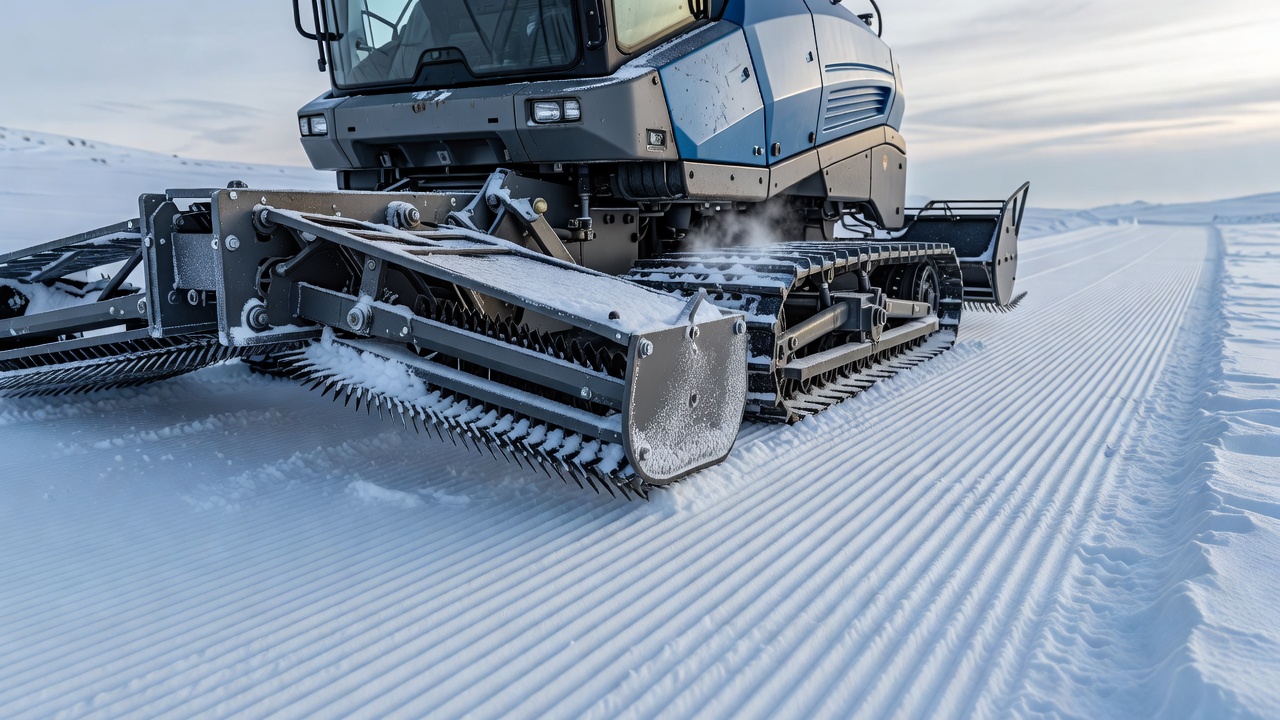
Grooming, snow production and stored snow can contribute to continuity, where the site has those capabilities. None removes weather dependence. Production depends on suitable conditions and technical capacity; storage requires space and management; preparation needs staff and machinery. Water, energy, environmental permissions and the surrounding landscape belong in the assessment rather than appearing only as operating costs after construction.
Weather information from the Deutscher Wetterdienst can provide a regional reference in Germany, while the WSL Institute for Snow and Avalanche Research SLF offers authoritative snow-related research and information in Switzerland. Such sources inform context; they do not replace venue surface reports or determine whether a particular training area is open.
Treat roller-ski provision as its own environment
A paved loop is not a winter trail with the snow removed. Drainage, surface condition, debris, gradients, junctions and user separation require their own review. The relationship to public paths can also change outside winter. Confirm which areas are dedicated, how the operator manages simultaneous use and whether the connection to other training facilities is available under the proposed arrangements.
Maintenance schedules matter as much as a loop's existence. Surface repairs, vegetation work and events may remove access temporarily. Teams should ask about current conditions and the process for reporting defects. A published map is useful for orientation, but it should not be mistaken for a live statement about surface quality or permission to use every section.
Compare provisions by their dependencies
| Provision | Contribution | Confirm with the operator |
|---|---|---|
| Prepared snow loop | Repeatable on-snow training space | Current extent, preparation periods and access |
| Snow production or storage | Potential support for seasonal continuity | Actual capability, resource limits and deployment |
| Roller-ski loop | Snow-free endurance infrastructure | Surface status, user separation and permitted sessions |
| Indoor support | Changing, drying, strength or meeting provision | Available rooms, opening times and reservation conditions |
| Timing and communications | Session information and coordination | Equipment availability, staffing and fault reporting |
Give indoor and technical support a clear role
Changing areas, drying space, equipment support, meeting rooms and appropriate indoor training provision can make a complex more usable. Their value depends on capacity and access, not merely their appearance in a brochure. A team may need to move between buildings during poor weather, carry equipment through a shared corridor or coordinate a meeting around another group's booking.
Timing equipment and communications introduce further dependencies: power, weather protection, compatible systems and someone responsible for operation. A display visible in competition photography may not be part of an ordinary training arrangement. Confirm what is included, what requires prior agreement and what happens when a technical service is unavailable. Avoid designing a whole session around an unconfirmed support feature.
Use established centres as questions, not templates
Vuokatti in Finland and Oberhof in Germany are established Nordic training locations associated with indoor skiing provision. They show that season extension can include specialized infrastructure, but they do not make that approach suitable for every site. Climate, energy demand, intended users and the wider regional offer all affect the case for investment. A local project needs its own evidence.
At smaller scales, operational coordination may achieve more than another major building. Aligning preparation times with group arrivals, communicating route changes reliably and maintaining usable drying facilities can remove recurring problems. These improvements are less conspicuous than new infrastructure, yet they directly affect whether a training day works as planned.
Build a seasonal review, not a permanent assumption
Before each visit, verify the current network, controlled-area availability, maintenance periods and support services. Keep an alternative session within the team's professional planning rather than assuming the operator can reproduce the original conditions. Longer-term facility reviews should revisit environmental effects and resource use alongside athlete demand. The objective is a dependable, proportionate operating system—not a promise that weather and maintenance can be eliminated.