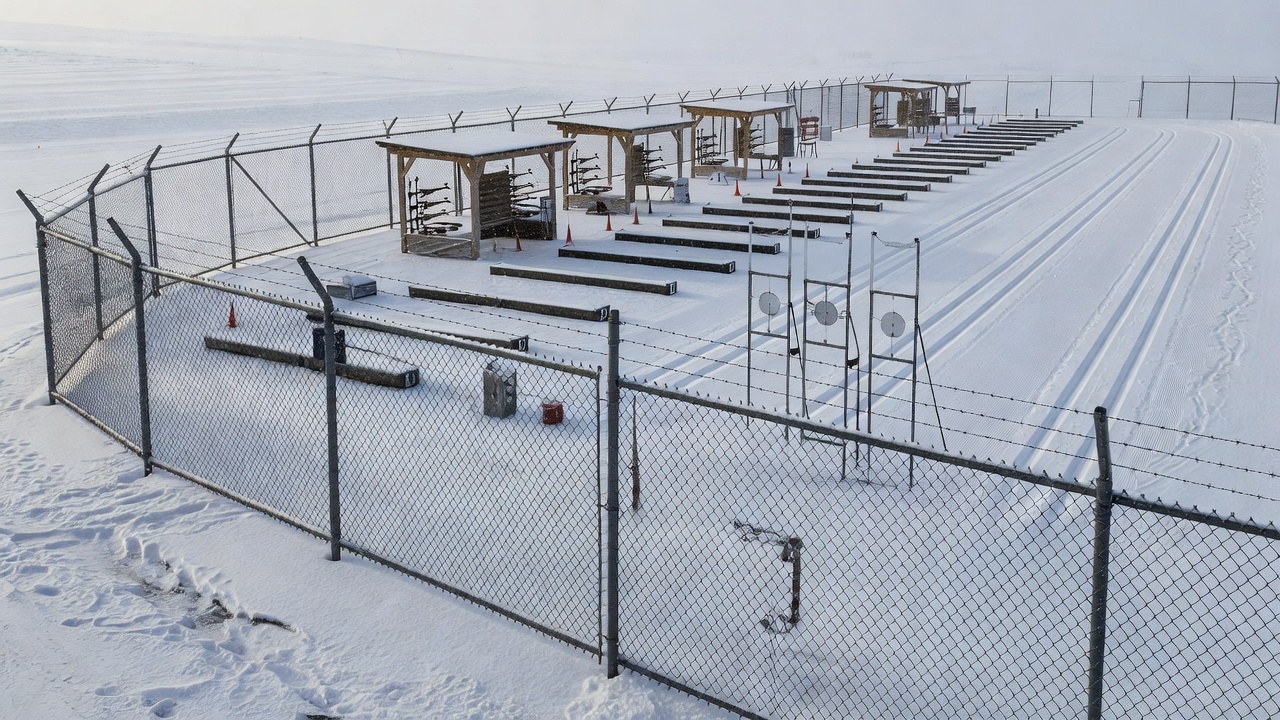
Separate physical provision from permission
A range can be visible, well maintained and unused at a particular moment without being available to a visitor. Access depends on the operator's arrangements, the activity proposed and the applicable legal framework. Professional training also requires coordination between the visiting organization and those responsible for the facility. These are operational conditions, not details that can be inferred from a photograph or a public trail map.
This brief concerns the setting and oversight of a biathlon range. It does not explain weapon handling, shooting technique, equipment preparation or live-use procedures. Those subjects require qualified, authorized instruction in the appropriate setting. A general website cannot establish a participant's eligibility, assess a particular activity or replace the directions of responsible venue personnel.
Make boundaries understandable
Controlled access starts before the central working area. Visitors need to know which paths are public, which gates require permission and where observation is permitted. The facility should not rely on a newcomer understanding an informal local convention. Signage, barriers and staff communication need to describe the same arrangement, including when the normal layout changes for maintenance or an event.
Coaches and support staff also need clarity. Authorization to accompany a team does not automatically include access to every service or controlled zone. A useful arrival briefing distinguishes permitted observation positions, waiting areas, equipment-support locations and routes between them. It should identify the responsible contact for questions rather than leave teams to negotiate boundaries among themselves.
Understand supervision as a defined responsibility
Qualified oversight is not interchangeable with the presence of experienced athletes. The operator should specify the supervisory arrangements required for the proposed session and how those arrangements are confirmed. A visiting coach's role may overlap with some training responsibilities while remaining distinct from the person responsible for the range. Any uncertainty needs resolution before the session begins.
Communication should remain effective when several groups or languages are involved. The relevant question for a planner is whether changes, interruptions and access restrictions can be communicated consistently to everyone affected. This article does not set those procedures. It explains why they belong to the operating system and why the responsible venue team must define them.
Place the range within its wider environment
Terrain, nearby circulation and neighboring land uses all influence how a controlled facility fits into a complex. Noise, drainage, winter maintenance and environmental management can require specialist assessment and regulatory attention. Visible barriers alone are not evidence that every necessary measure has been assessed. Nor should a major competition history be described as a universal safety certification.
The Roland Arena in Lenzerheide and the Tehvandi Sports Center in Otepää are real biathlon settings that can be studied for their relationship to broader sports infrastructure. Their names do not establish permission for a particular visitor or imply that their operating arrangements match those of another site. Current venue information and direct confirmation are necessary for any proposed use.
Keep support infrastructure within the same plan
Timing, target systems, power, communications and maintenance access form a technical layer around training. Reliability matters, but equipment specifications are not the whole issue. Staff need authorized access to inspect or maintain systems under the operator's procedures. Equipment faults should not encourage visitors to enter restricted areas or improvise their own response.
For observers, the most informative questions often concern organization rather than hardware. Who reports a fault? Where does a group wait if the session is interrupted? How are permitted observation areas identified? The answers reveal whether the range functions as a well-managed part of the stadium rather than an isolated installation surrounded by informal practices.
Use the right sources for the right questions
The International Biathlon Union is a primary source for international biathlon rules and competition context. National authorities and local law govern additional requirements, while the operator defines the arrangements at a particular venue. These sources answer different questions and should not be collapsed into a single claim that a facility is suitable for every user.
When comparing complexes, record what has actually been confirmed: available operating periods, required supervision, access conditions and the contact responsible for the proposed session. Leave unanswered items visibly unresolved. A disciplined comparison is more useful than an apparently complete checklist built from assumptions, particularly where a controlled environment interfaces with public circulation and intensive team training.
Do not enter a controlled range area or assume that equipment may be used because the facility appears quiet. Obtain the operator's authorization and follow the directions of responsible personnel.